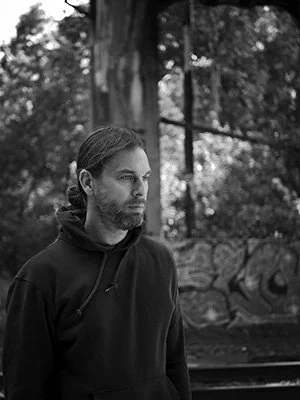
For as long as I can remember, my studio work has returned to the problem of flux. Specifically how uncertainty, complexity, instability, and pattern shape visual culture, design practice, and the human condition. I’m fascinated by flux as a condition my mind meets again and again, in different forms. The work has become increasingly more complicated because the questions have become more demanding over time. For example, in 2006 flux meant I was learning how to harness randomness and uncertainty in my studio practice. Maybe because I’m naturally drawn to the places where systems become unstable and maybe because the built environment I was trained to see felt stale and still.
In my quieter moments, I see patterns emerge in the way we collectively move through the world and in the way our decisions are either manufactured or intuitive. I can trace this thinking back to my childhood, when extended periods of wandering allowed me to look for meaning as countless ordinary days flew by. I feel lucky to have had a technology-free childhood. It was a gift. A ticket to other worlds that I wish other people were able to visit. In the darker moments, I taught myself to be watchful while the lighter moments taught me to be deeply grateful. This great torrent of wonder and disturbance but it kept my nervous system on high alert. When I began to see patterns in volatility, it emerged as a language that spoke to me in ways other people couldn’t hear. A great and terrible river of loneliness. I cultivated that skill over the years and grown to treasure it even now. This way of seeing and being is so deeply embedded in my bones, I had no choice but to call it the Flux Doctrine. My life’s work.